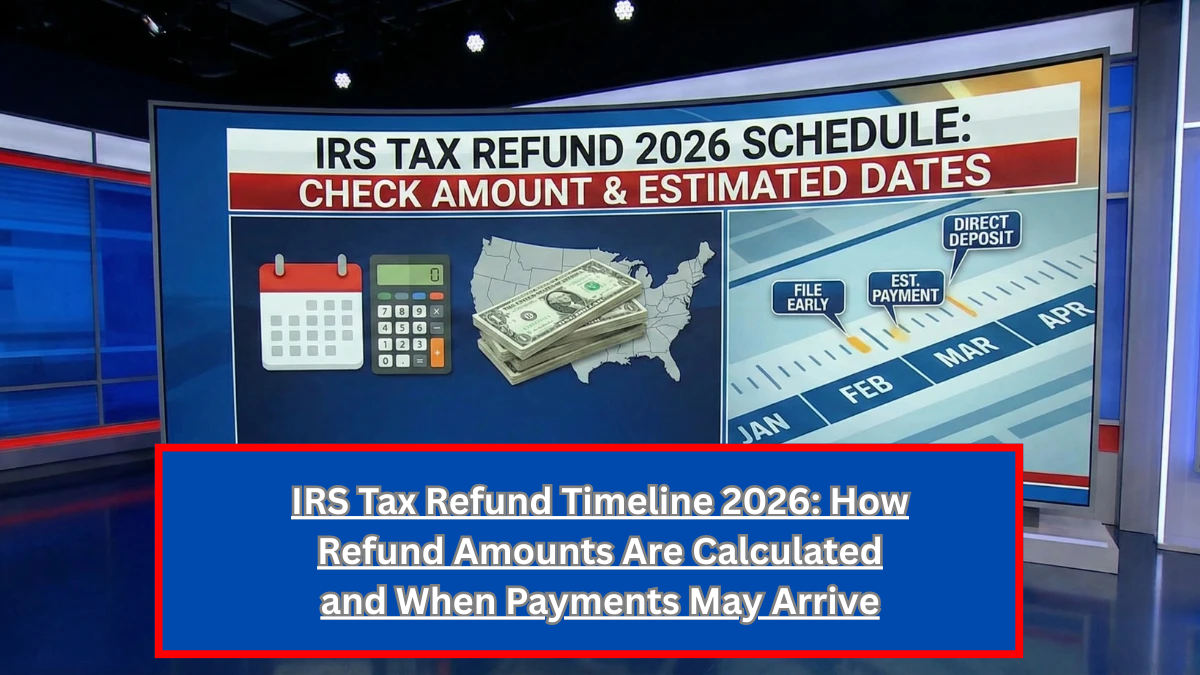
Interest in the IRS tax refund timeline for 2026 is growing as taxpayers across the United States prepare for the upcoming filing season and look for reliable information about refund amounts and payment timing. To prevent confusion, it is important to understand that the Internal Revenue Service does not issue fixed refund dates or guarantee specific refund amounts. Refunds are released only after tax returns are fully processed and verified. This article explains how the IRS refund process works, what realistic timing looks like, and what taxpayers should expect in 2026.
Is There an Official IRS Refund Schedule for 2026
No. The IRS does not publish an official refund schedule with exact payment dates. Refunds are processed on a rolling basis once tax returns are accepted and cleared through required verification checks. Any website or source claiming precise IRS refund dates for 2026 should be viewed with caution.
Estimated IRS Refund Payment Timeframes Based on Standard Practice
| Filing Method | Estimated Timing |
|---|---|
| E-file with direct deposit | About 21 days after acceptance |
| E-file with paper check | Slower than direct deposit |
| Paper-filed return | Several weeks or longer |
| Amended return | Multiple months possible |
| Return under review | Timing varies |
These timeframes are estimates, not guarantees, and depend on individual return processing.
How IRS Refund Amounts Are Determined
Refund amounts are calculated based on a taxpayer’s total income, tax withheld during the year, eligible credits, and deductions. During processing, the IRS may make adjustments if errors or mismatches are found. Because every tax situation is different, there is no standard or guaranteed refund amount for all taxpayers.
Common Reasons IRS Refunds Are Delayed
Refund delays are usually caused by routine processing checks. Common reasons include identity verification requirements, missing or incorrect information, mismatched income records, or tax credits that require additional review. These safeguards are not new for 2026 and are part of normal IRS procedures.
When the IRS Sends Refund Payments
Once a return is fully processed and approved, the IRS releases the refund promptly. However, banks and financial institutions determine when the funds appear in an account, which can add an extra business day even after the IRS sends the payment.
How to Check Your IRS Refund Status
Taxpayers can track their refund status using official IRS tools after filing their return. Status updates typically show whether the return has been received, approved, or sent for payment. These tools provide the most accurate and up-to-date information.
Key Points to Remember
- There is no fixed IRS refund schedule for 2026
- Refund amounts vary based on individual tax details
- E-filing with direct deposit is usually the fastest option
- Paper and amended returns take longer to process
- Only official IRS tools provide reliable refund updates
Conclusion
The IRS tax refund process in 2026 will follow established procedures rather than preset payment dates. While many refunds are issued within a few weeks of acceptance, actual timing and refund amounts depend on each individual return. Taxpayers should rely only on official IRS information and tools to avoid misinformation and unrealistic expectations.
Disclaimer
This article is for informational purposes only and does not constitute tax, legal, or financial advice. Refund timing and amounts depend on individual filings and official IRS procedures.