As the 2026 tax filing season approaches, many taxpayers are searching for clear information about when they can expect their IRS tax refunds. Online headlines often suggest fixed refund dates or guaranteed payment timelines, but in reality, the Internal Revenue Service does not publish an official refund calendar. Refund timing depends on several factors, including how and when a return is filed, the accuracy of the information provided, and whether additional verification is required. This article explains what taxpayers should realistically expect from the IRS refund process in 2026.
Is There an Official IRS Refund Schedule for 2026?
The IRS does not release a fixed or guaranteed refund schedule. Refunds are issued only after a tax return has been processed, verified, and approved. While the IRS provides general processing time estimates, individual refund timelines can vary widely based on each taxpayer’s situation.
Typical IRS Refund Processing Time
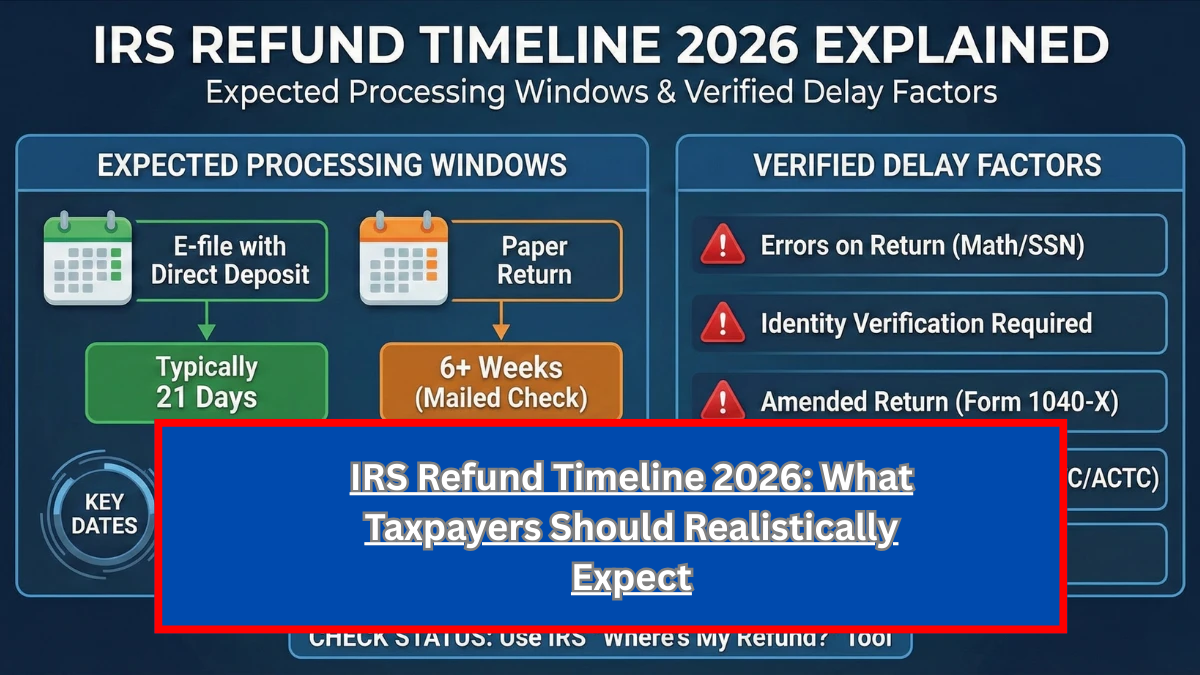
For most taxpayers who file electronically and choose direct deposit, refunds are usually issued within 21 days after the return is accepted. However, this is an estimate rather than a guarantee. Paper-filed returns generally take longer to process, sometimes several weeks or more.
Factors That Can Delay a Tax Refund
Several factors may slow down refund processing in 2026, including:
- Errors or missing information on a tax return
- Claims for refundable credits such as the Earned Income Tax Credit or Child Tax Credit
- Identity verification or fraud prevention reviews
- Filing paper returns instead of electronic filing
- Incomplete or inconsistent income documentation
Any of these issues may result in additional review time before a refund is released.
Refund Amounts Are Not Guaranteed
Refund amounts vary based on income, tax withholding, credits claimed, and filing status. The IRS does not guarantee a specific refund amount, and changes during processing may increase or reduce the expected payment.
How Taxpayers Can Track Their Refund
Taxpayers can monitor the status of their refund using the IRS “Where’s My Refund” tool or the IRS mobile app. Updates are provided as the return moves through processing stages, though not all delays generate detailed explanations.
Direct Deposit vs Paper Check
Choosing direct deposit is the fastest and safest way to receive a tax refund. Refunds sent by paper check take longer to mail and may be subject to postal delays.
Key Facts to Remember
- The IRS does not publish an official refund calendar
- Most e-filed returns with direct deposit are processed within about 21 days
- Refund timing depends on accuracy, credits claimed, and verification checks
- Paper returns take significantly longer to process
- Refund amounts may change after IRS review
Conclusion
The IRS refund timeline for 2026 depends on individual filing choices and return accuracy rather than fixed dates. Taxpayers who file early, use electronic filing, and select direct deposit generally receive refunds faster. For the most reliable and up-to-date information, taxpayers should rely on official IRS tools and announcements rather than online speculation.
Disclaimer
This article is for informational purposes only and does not constitute tax, legal, or financial advice. Refund timelines depend on individual filings, IRS procedures, and official government operations.